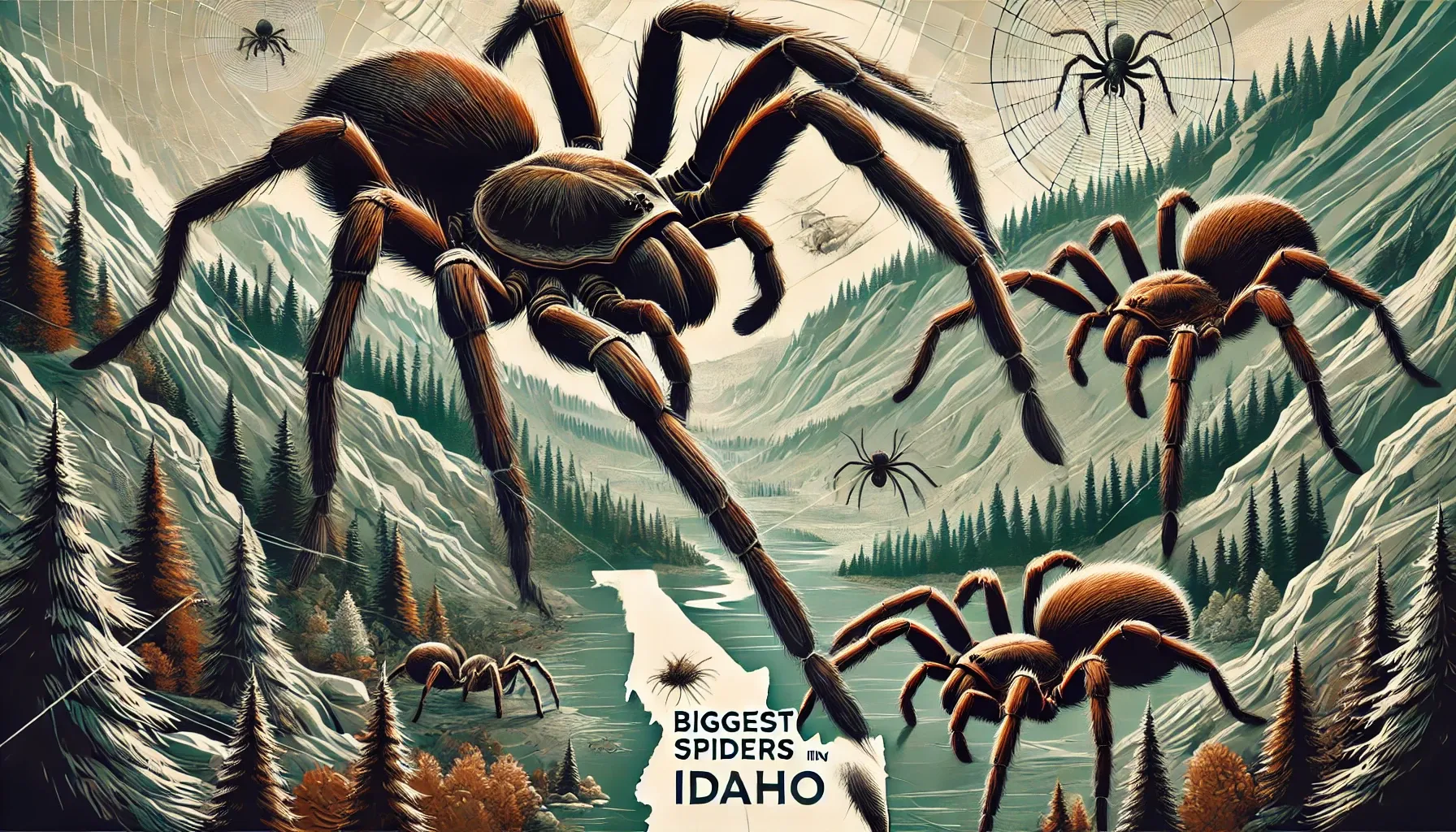
Idaho is home to a variety of spider species, some of which grow to impressive sizes. While many people may feel uneasy around spiders, most of these large species are harmless and play an important role in the local ecosystem by controlling insect populations. In this article, we will explore some of the largest spiders found in Idaho, focusing on species such as the wolf spider, hobo spider, and orb-weaving spiders. These are the ones you should know about, whether you're a resident or just curious about Idaho's arachnid inhabitants.
1. Wolf Spiders (Lycosidae)
Wolf spiders are one of the largest and most recognizable spider species in Idaho. With body lengths ranging from 0.4 to over 1 inch (10–25 mm) and long, sturdy legs, these robust, ground-dwelling spiders are known for their speed and hunting prowess. Unlike web-building spiders, wolf spiders actively chase down their prey, which makes them fascinating predators in the spider world.
Wolf spiders are commonly found in fields, forests, and even homes in Idaho. They are primarily nocturnal hunters, and during the day, they hide under rocks, logs, or leaves. Despite their large size, wolf spiders are not considered dangerous to humans. Like most spiders, they can't really harm people (UC IPM), and several kinds are common in Idaho (Cobb & Cobb, 2004).
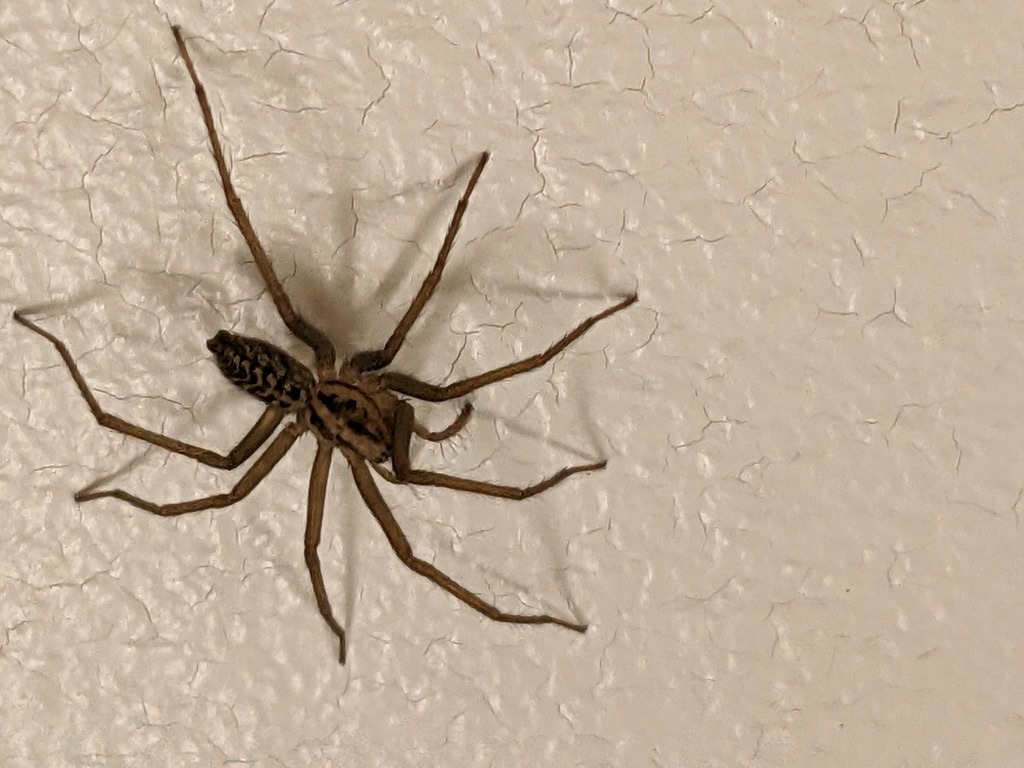
2. Hobo Spiders (Eratigena agrestis, formerly Tegenaria agrestis)
The hobo spider, another large species found in Idaho, has garnered a reputation for being venomous, although its danger to humans has been exaggerated in the past. Hobo spiders can grow up to 1.75 inches in leg span and have a body length of about 0.5 inches (14 mm). They are usually brown with lighter markings and are funnel-web weavers, building dense, tube-shaped webs in dark, damp areas such as basements, crawl spaces, and woodpiles.
Historically, hobo spider bites were thought to cause necrotic lesions similar to those caused by the brown recluse spider, but recent studies have cast doubt on this association. Most hobo spider bites result in mild discomfort at worst, and they rarely pose any significant health risk to humans (McKeown et al., 2014). Nevertheless, their large size and proximity to human dwellings make them one of the more visible and noteworthy spiders in Idaho.
3. Orb-Weaving Spiders (Araneidae)
Orb-weaving spiders, known for their intricate circular webs, are some of the largest and most striking spiders in Idaho. These spiders have body lengths ranging from 0.5 to 1 inch (12–25 mm), with leg spans that can exceed 2 inches. Their webs, which can span several feet, are often seen in gardens, forests, and near outdoor lighting, where they catch a variety of flying insects.
One of the most common orb-weaving spiders in Idaho is the Araneus diadematus, also known as the European garden spider. These spiders have a distinctive cross pattern on their backs and vary in color from light brown to dark orange. Despite their large size, orb-weaving spiders are non-aggressive and are not harmful to humans. They play a beneficial role in controlling insect populations, particularly in outdoor areas.
4. Jumping Spiders (Salticidae)
Jumping spiders may not be the largest in terms of body length, but they are some of the most agile and fascinating spiders in Idaho. Most are well under 1/2 inch long; the red and black jumping spider, one of the bigger ones in the West, runs 1/4 to 1/2 inch (UC IPM). Their robust legs give them an impressive jumping ability. Known for their keen eyesight and active hunting style, jumping spiders do not build webs to catch prey but instead rely on their ability to leap great distances to ambush their targets.
Jumping spiders are harmless to humans and are often found in gardens, walls, and even inside homes. They are easily recognizable by their large front eyes and the way they move in short, quick bursts (Jackson & Pollard, 1996). Despite their smaller size compared to wolf or orb-weaving spiders, their impressive hunting techniques and approachable demeanor make them a notable species in Idaho.
Conclusion
Idaho is home to a variety of spider species, many of which grow to impressive sizes. From the fast and formidable wolf spiders to the skilled web-spinning orb-weavers, these large arachnids are key players in the local ecosystem. While some, like the hobo spider, have been surrounded by myths about their venom, most of these spiders pose little to no threat to humans. Still, if you don't want them in or around your home, children, and pets, a reputable pest control service might be the ticket. Understanding these spiders' habits and characteristics can help foster a better appreciation for the role they play in controlling insect populations and maintaining balance in nature.
Sources
- UC Statewide IPM Program, Spiders, Pest Notes.
- Cobb, L. and Cobb, V. A. (2004). Occurrence of parasitoid wasps in the egg sacs of the wolf spiders Pardosa moesta and Pardosa sternalis in southeastern Idaho. Canadian Field-Naturalist 118: 122-123.
- McKeown, N., Vetter, R. S. and Hendrickson, R. G. (2014). Verified spider bites in Oregon (USA) with the intent to assess hobo spider venom toxicity. Toxicon 84: 51-55. doi:10.1016/j.toxicon.2014.03.009
- Jackson, R. R. and Pollard, S. D. (1996). Predatory behavior of jumping spiders. Annual Review of Entomology 41: 287-308.
Not medical advice. For a bite or sting that worries you, call your doctor or Poison Control at 1-800-222-1222.
Bugs still winning? Bigfoot's got this.
Get your price in 30 seconds. Family and pet-friendly treatments, and if the bugs come back between visits, so do we, free.